research (cards)
what we work on in the lab and the projects that fund it
Our group at KU Leuven develops the mathematical models, reconstruction algorithms, and machine-learning methods that turn raw scanner data into accurate, quantitative medical images. We work across molecular imaging modalities — primarily PET and SPECT, and increasingly MR — with a strong emphasis on open, reproducible, and computationally sustainable software.
Research themes
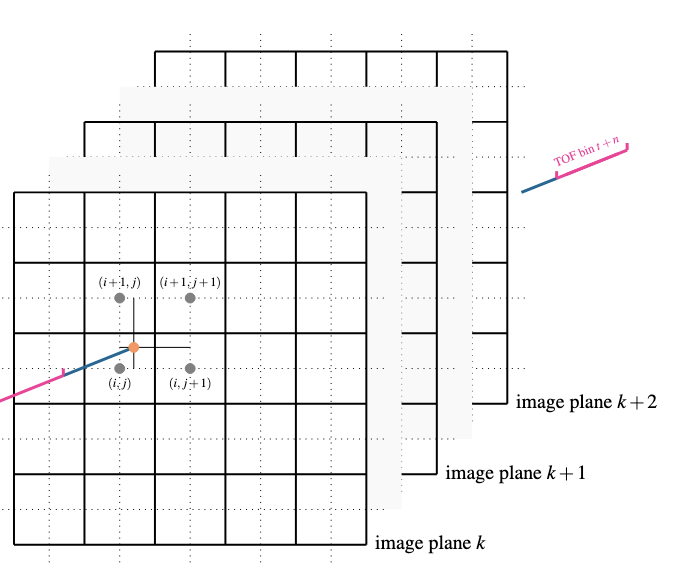
Fast, scalable PET/SPECT reconstruction
Accelerated, model-based reconstruction algorithms and the high-performance projectors behind them, for state-of-the-art image quality at clinically practical speed.
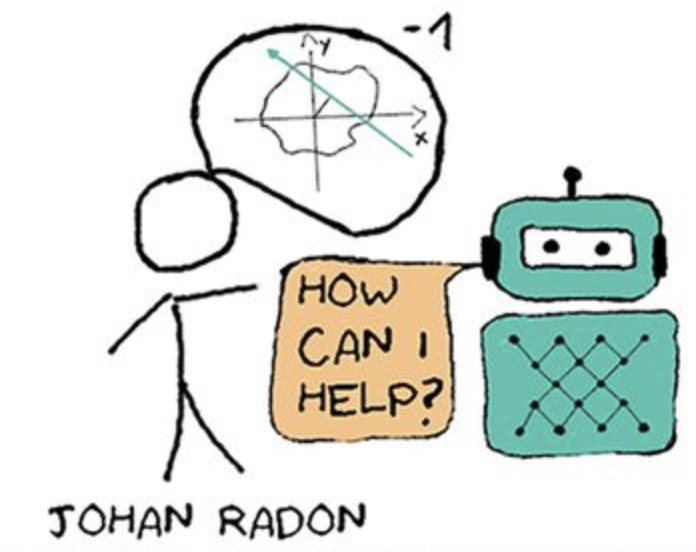
Deep learning for low-dose & accelerated PET
Dose- and time-reducing deep learning for PET — anatomy-guided denoising and listmode DL reconstruction. Winner of the PETRIC and ultra-low-dose PET challenges.
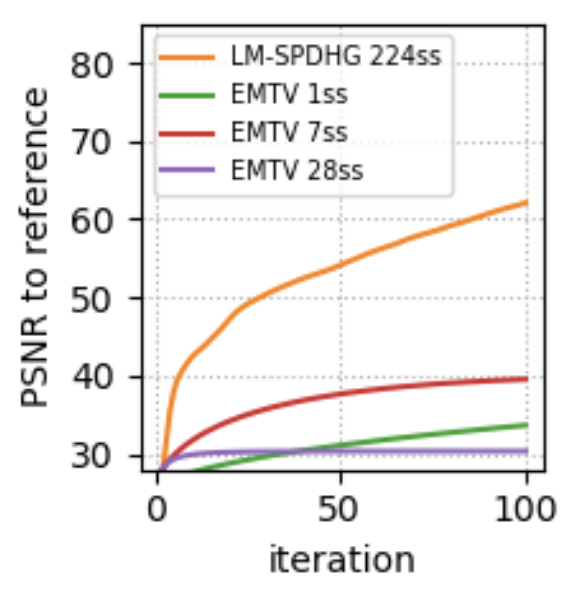
Sustainable, compute-efficient ML
Memory- and compute-efficient training, inference, and preconditioning — making advanced imaging ML practical, reproducible, and energy-aware.
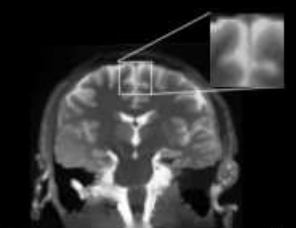
Sodium (23Na) MR reconstruction
Extending our reconstruction expertise to sodium (23Na) MRI — quantitative methods for a challenging, low-SNR modality that probes tissue viability and metabolism.
Funded projects
- ‹Project title› — ‹funder, e.g. FWO / KU Leuven C1 / Horizon Europe›, ‹PI or co-PI›, ‹2024–2028›. ‹One-sentence description of the project.›
- ‹Project title› — ‹funder›, ‹role›, ‹years›. ‹One-sentence description.›
- ‹Project title› — ‹funder›, ‹role›, ‹years›. ‹One-sentence description.›