research
what we work on in the lab and the projects that fund it
Our group at KU Leuven develops the physics models, reconstruction algorithms, and computational tools that turn raw PET and SPECT scanner data into accurate, quantitative images. We combine model-based reconstruction, advanced optimization, and machine learning, with a strong emphasis on open, efficient, and reproducible software.
Research themes
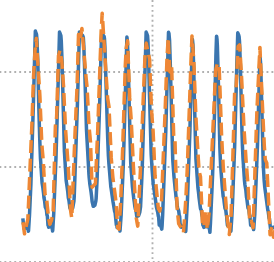
Advanced physics modeling for higher image quality
The quality of a reconstructed image is limited by how faithfully we model the physics of the acquisition. We develop improved models of effects such as photon scatter and patient and organ motion, and embed them directly into the reconstruction — yielding images that are quantitatively more accurate and visually sharper.
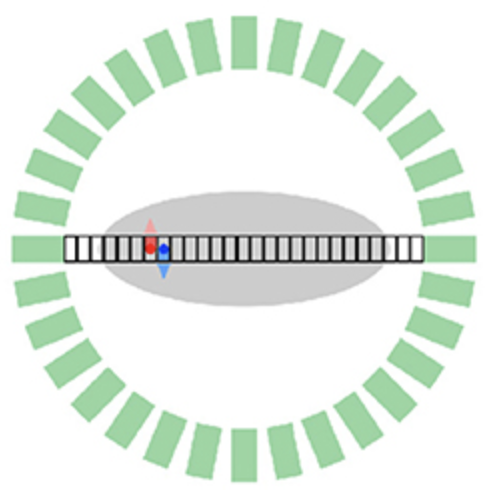
Joint estimation of activity and attenuation in PET
Accurate PET quantification requires knowing the attenuation image, which is not always available or reliable. We develop methods that estimate the tracer activity distribution and the attenuation simultaneously from the emission data itself, reducing the dependence on separate CT- or MR-based attenuation information.
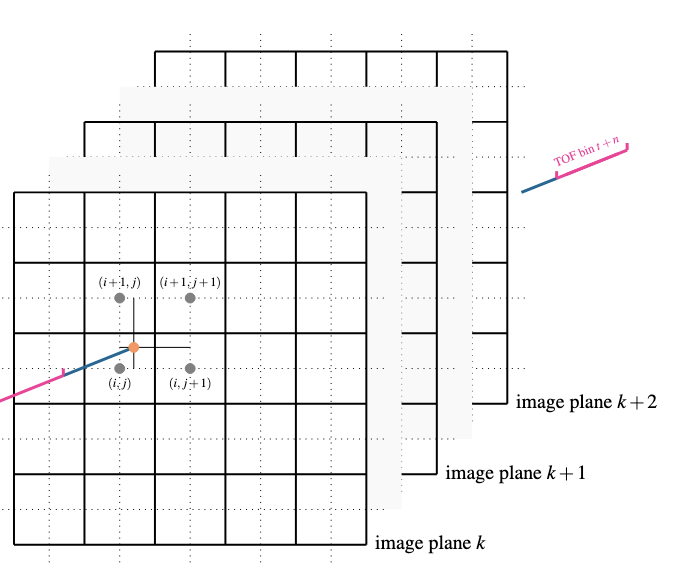
Fast, efficient, and DL-ready PET reconstruction
Modern reconstruction and deep-learning methods need building blocks that are fast and fully differentiable. We develop efficient, GPU-accelerated and differentiable computational tools for PET — including our open-source parallelproj projectors — that plug directly into both classical iterative algorithms and modern learned reconstruction pipelines.
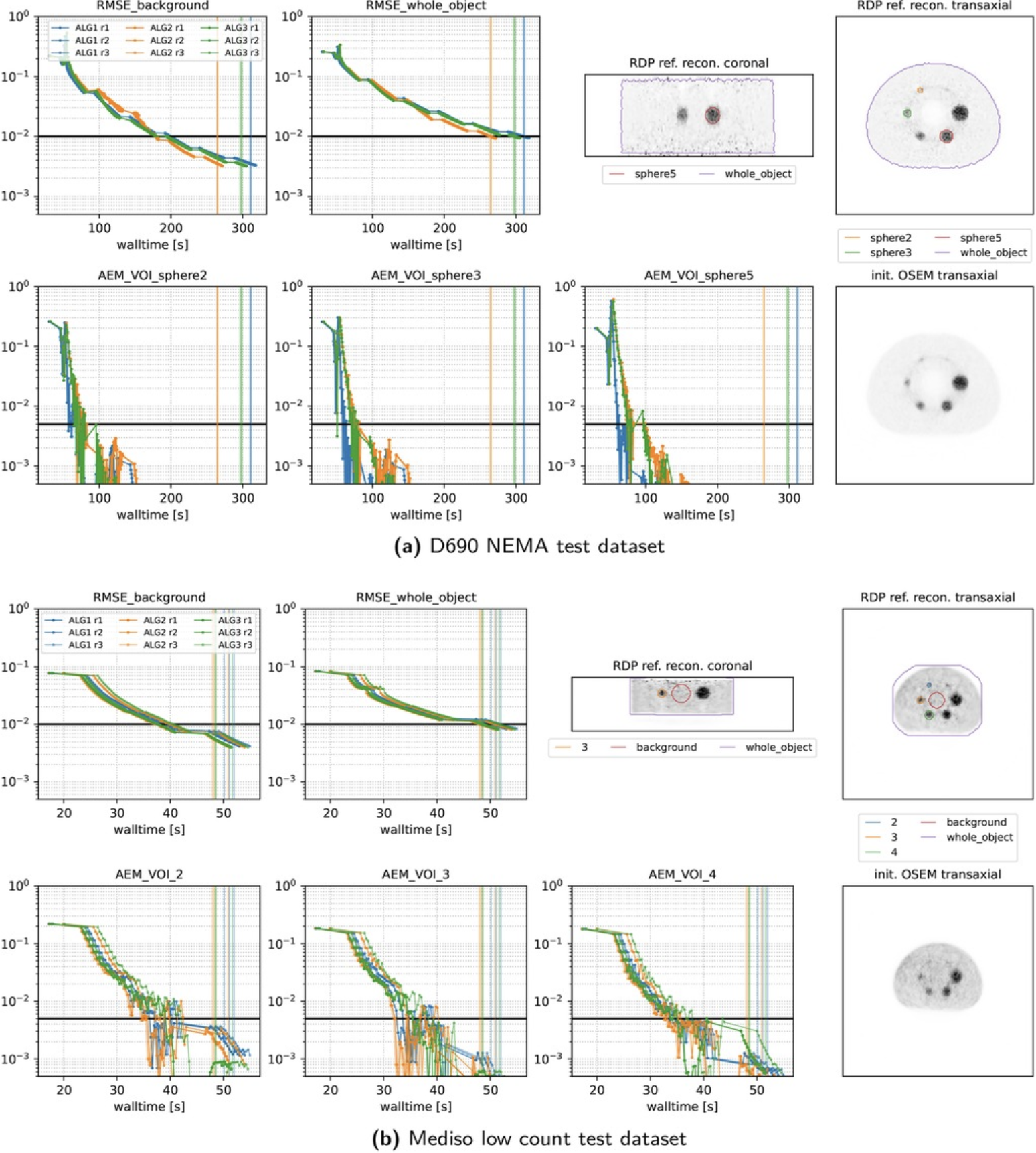
Advanced image reconstruction algorithms
Beyond modeling, the optimization algorithm that solves the reconstruction problem matters. We design and adapt advanced, computationally efficient optimizers — such as stochastic variance-reduced gradient (SVRG) methods — for PET reconstruction, accelerating convergence and reducing the compute needed to reach high-quality images.
Funded projects
- Enhancing Precision and Accuracy of Positron Emission Tomography: Leveraging Variational Methods and Machine Learning for Advanced Static and Dynamic PET Image Reconstruction from Raw Data — FWO Weave project (G016626N), lead PI, 2026–2028. Joint project with Prof. Martin Holler (University of Graz, Austria) and Prof. Reinhard Heckel (TU Munich, Germany).
- Computational Methods for Ultra-High Resolution Brain PET Imaging — KU Leuven internal C2 project (3M250523), co-PI (promotor of the KU Leuven sub-project), 2025–2029. With Prof. Koen Van Laere and Prof. Michel Koole (KU Leuven).